Tenderness Is My Form of Resistance
A Love Letter to the Women Who Shaped Me
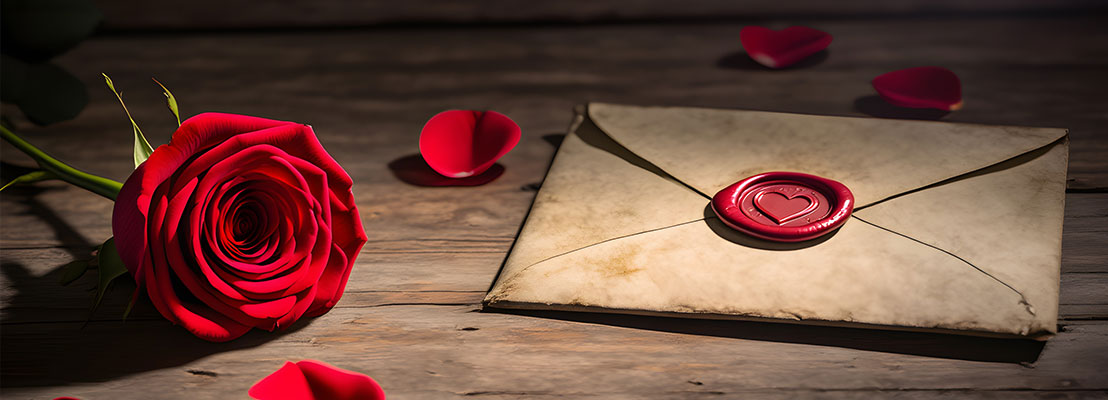
Summary: Written in the quiet hours of Valentine’s night—spilling into the early morning until 3:30 a.m.—this piece is a late-night confession shaped by memory, longing, and resistance. Inspired by novels, poetry, and yes, a soft spot for romantic relics and grand gestures, my reflections on the women who have left an indelible mark on my life—my many Zahirs, the loves that linger, the encounters that transform.
Yeah, yeah—call it a cliché. Like any cinematic love story we’ve all seen a hundred times. But here’s the part we can’t deny: that deep, stubborn yearning to find that one person to share life with never really goes away. No matter how many endings we survive, the desire to love and be loved keeps knocking.
Through love and loss, intimacy and regret, tenderness and struggle, I trace back on how each relationship shaped my emotional, spiritual, and political becoming. This is not a story of perfection, but of learning—of becoming more humble, compassionate, and open through both connection and heartbreak. It honors women not as ideals, but as human beings whose presence helped form the man I am today.
At its core, this reflection insists that love is not naïve—it is an act of resistance. In a world that hardens the heart, choosing tenderness becomes a quiet rebellion. The piece moves between romance and revolution, personal vulnerability and collective struggle, affirming that the fight for justice and the fight for love are not separate battles. To love deeply, even after loss, is to refuse surrender—and to believe that one day, one love may still be worth building a life around..
Zāhir—an Arabic word that means visible, evident, manifest, and undeniable.
Many years ago, I read a novel by the Brazilian author Paulo Coelho called The Zahir. In that story, the Zahir is someone—or something—that, once encountered, comes to dominate a person’s thoughts. It becomes impossible to forget. It marks you. It changes you.
Looking back on my life, I realize I’ve had many Zahirs.
Women who entered my life and, in one way or another, never fully left it. Women who shaped me. Women who taught me. Women through whom I became the man I am today.
I learned from love.
I learned from intimacy.
I learned from tenderness and desire.
I learned from laughter, shared dreams, and long conversations that felt endless.
I also learned from pain.
There were beautiful moments and difficult ones. I was hurt, and I hurt others, too. I was no angel. I made mistakes—some I carry with regret. But wherever I was wounded, I learned. Wherever I failed, I grew.
Each woman who crossed my path left something with me:
a way of seeing,
a way of feeling,
a way of loving.
Because of them, I became more humble.
More compassionate.
More emotionally open.
More responsible.
More spiritual.
More cultured.
More willing to take risks—for love, for growth, for becoming more fully human.
People say a man must be strong, must provide, must protect his loved ones. I believe that’s a given—for any human being, regardless of gender. But what we don’t talk about enough is how love changes a man. How moving from one relationship to another leaves pieces behind and carries pieces forward.
Ideas, values, tenderness—they stay with you. They shape your emotional vocabulary.
Women have the power to mold a man in profound and positive ways. And of course, no one is perfect. Women have flaws, just as men do. I still have my flaws. I am still learning—every day.
If I could go back, I would thank every woman I’ve loved. Even the ones it didn’t work out with. Especially the ones it didn’t work out with.
I would say:
“We failed. But you taught me something. And because of you, I am more human today.”
How ironic—after all the endings, all the broken attempts, all the unfinished stories—I still believe in love.
Call me naïve.
Call me gullible.
Call me foolish if you want.
I’ve been told that love is an illusion.
I refuse to accept that.
Because if love is an illusion, then what are we fighting for?
Why did our ancestors give their lives for what they believed in?
Why do we struggle for justice, for dignity, for a better world?
People fight for what they love.
They die for what they love.
They endure for what they love.
And so I will continue to fight.
I will continue my resistance, my struggle, my political activism, my solidarity with comrades, friends, and family—to build a more just society, a more humane community.
But I will also continue to fight for love.
For that one person, I might still meet.
The one I could grow with.
Grow old with.
Build a life with.
To be seen by her.
To rise with her.
To see my life reflected through her eyes.
To hold her tenderly.
To love with a passion that does not let go.
Two lives moving as one universe.
Two souls choosing each other again and again.
If that love exists—
then it is worth living for.
And yes, even worth dying for.
That is the fight.
And that is the hope I refuse to surrender.